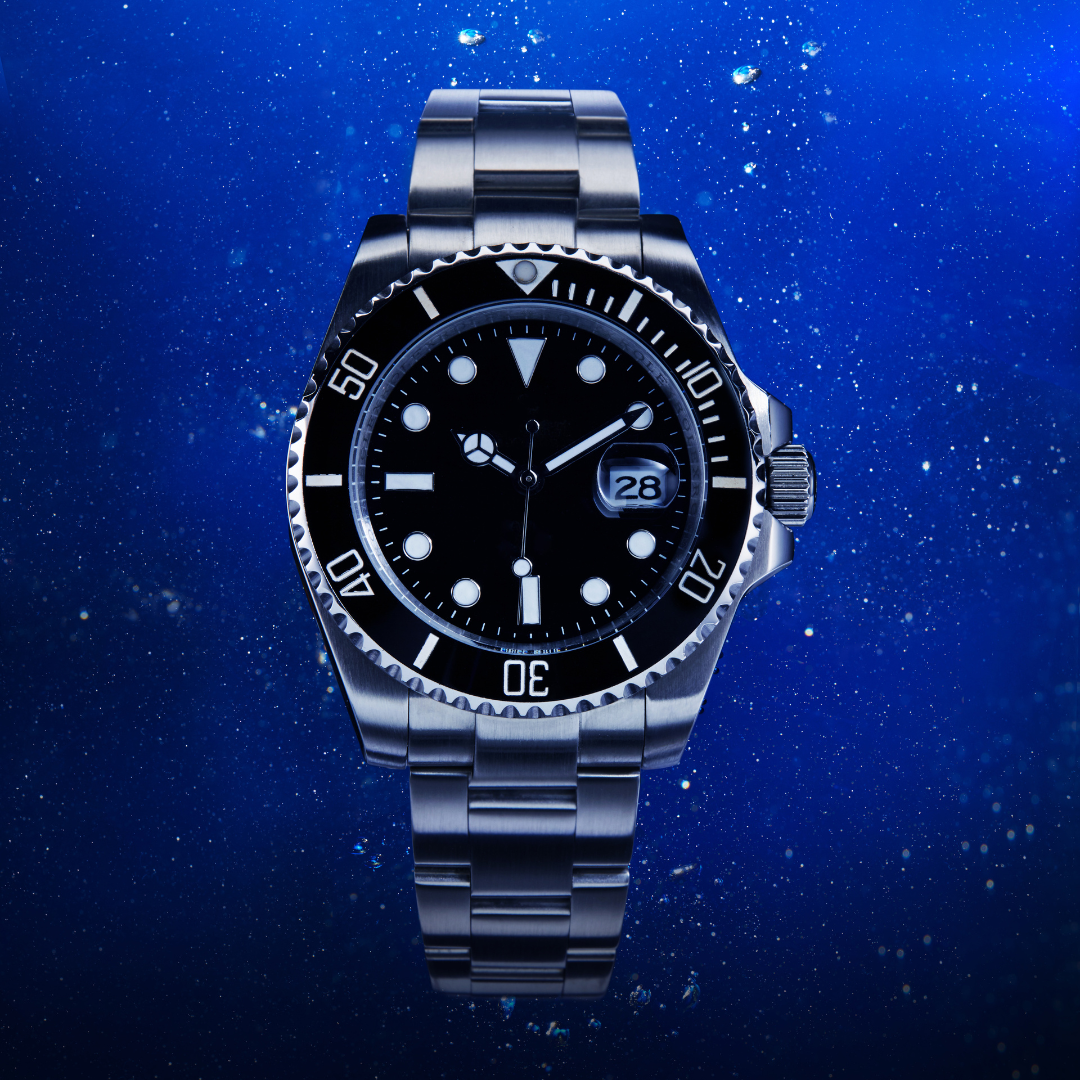
Watches have evolved from mere timekeeping instruments to sophisticated accessories that withstand the rigors of everyday life. One crucial aspect that reflects a watch’s durability is its water resistance. Whether you’re a diver exploring ocean depths or someone caught in an unexpected downpour, understanding the nuances of water resistance is essential in choosing a timepiece that can accompany you through life’s various adventures.
- Understanding Water Resistance Ratings:
- ATM (Atmosphere) Rating: The water resistance of a watch is often measured in atmospheres, denoted as ATM. One atmosphere is approximately equal to the air pressure at sea level. A watch rated at 3ATM, for instance, is designed to withstand pressures equivalent to 30 meters underwater. It’s important to note that this rating does not mean the watch is suitable for diving to that depth but rather indicates its ability to resist splashes and light exposure to water.
- Common Ratings:
- 3ATM (30 meters): Resistant to rain and splashes.
- 5ATM (50 meters): Suitable for swimming and light snorkeling.
- 10ATM (100 meters): Adequate for recreational scuba diving.
- 20ATM (200 meters): Suitable for professional diving.
- Factors Influencing Water Resistance:
- Case Construction: The construction of the watch case plays a pivotal role in determining water resistance. A well-sealed case with tight-fitting components is crucial. Materials like stainless steel, titanium, and ceramics are popular choices for water-resistant watches.
- Gaskets and Seals: The presence of rubber or silicone gaskets and seals at vulnerable points, such as the crown, case back, and pushers, is vital. These components create a watertight seal, preventing water from infiltrating the watch’s delicate internals.
- Crown Design: The crown, used for setting the time and date, is a potential weak point. A screw-down crown, when tightened, forms a watertight seal, enhancing the overall water resistance of the watch.
- Crystal Type: The watch crystal, covering the dial, is typically made of materials like sapphire or mineral glass. While sapphire is highly scratch-resistant, it also contributes to water resistance by forming a tight seal with the case.
- Strap or Bracelet Sealing: Leather straps, being porous, are generally less water-resistant than metal or rubber bracelets. However, advancements in strap technology include water-resistant leather and rubber materials, providing more options for enthusiasts with diverse tastes.
- Caring for Water-Resistant Watches:
- Regular Maintenance: Even water-resistant watches require periodic checks and maintenance. Gaskets may wear out over time, compromising the seal. Regular servicing by a certified watchmaker ensures the continued integrity of the water resistance.
- Avoid Extreme Conditions: While a water-resistant watch is designed to withstand water exposure, extreme conditions like hot showers or saunas can affect the seals. It’s advisable to avoid exposing the watch to sudden temperature changes.
Water resistance is a critical feature for watches, offering wearers the confidence to explore their environments without compromising precision and functionality. Understanding the intricacies of water resistance ratings, coupled with proper care and maintenance, ensures that your timepiece remains a reliable companion through all of life’s watery escapades. Whether you’re a casual wearer or an avid diver, a water-resistant watch is not just a timekeeping device but a testament to the watchmaker’s commitment to precision and durability.
No Responses