
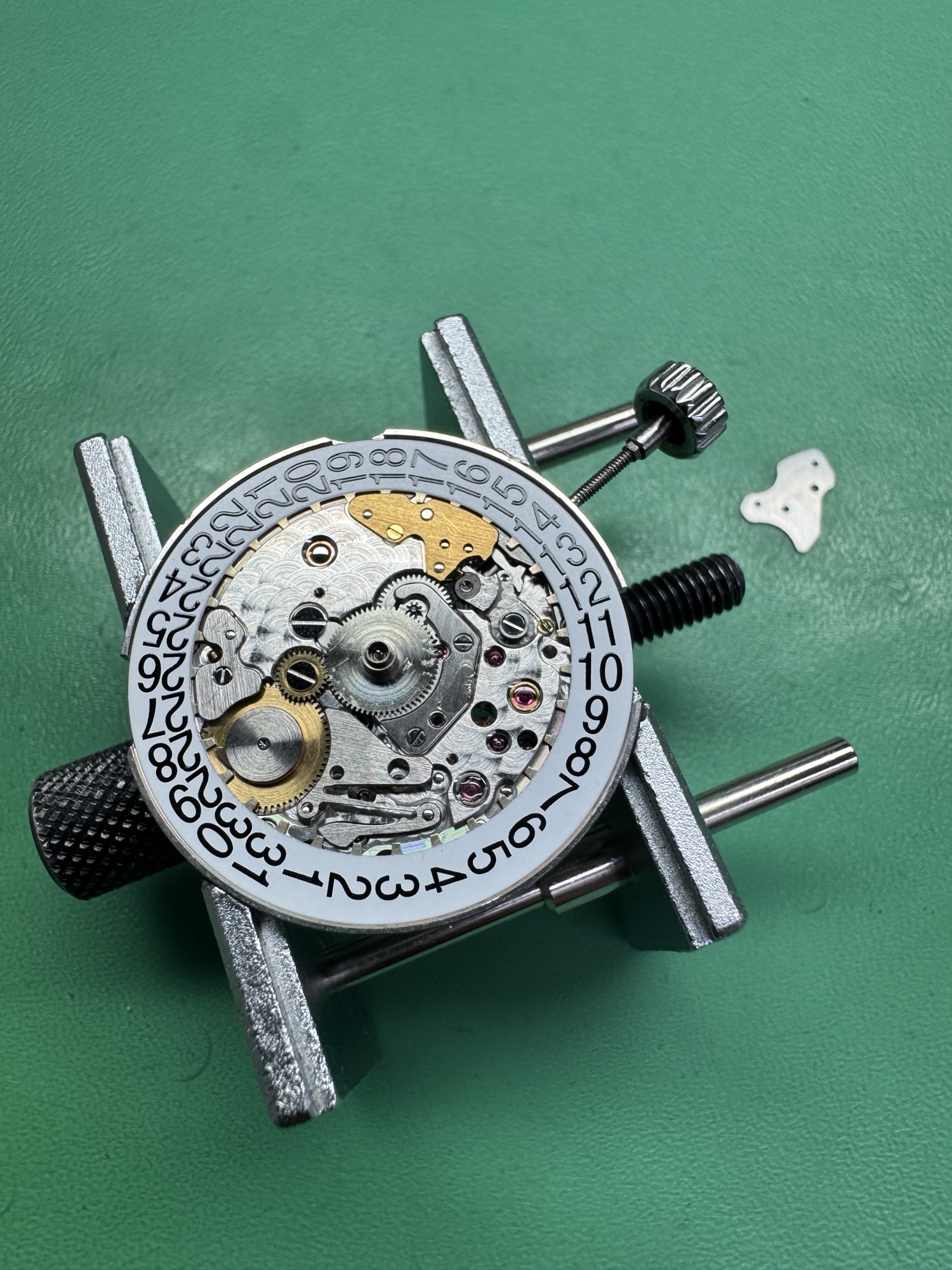
When discussing the greats of Swiss watchmaking, Audemars Piguet stands among the most revered names in the industry. Known for its impeccable craftsmanship, groundbreaking designs, and unwavering commitment to excellence, the brand is often associated with the legendary Royal Oak. While its aesthetics have drawn countless admirers, the beating heart inside many of these timepieces—the Caliber 3120—deserves equal recognition.
In this comprehensive guide, we will explore everything about the Audemars Piguet Caliber 3120, from its history and development to its technical details, decorative finishing, and its place in horological history.
The Birth of the Caliber 3120
Before 2003, many of Audemars Piguet’s iconic watches—including the Royal Oak—relied on outsourced movements. This wasn’t unusual for the time, as even prestigious brands used ébauches from specialized movement manufacturers like Jaeger-LeCoultre and Frédéric Piguet. However, as consumer expectations evolved and the demand for fully in-house calibers grew, AP recognized the importance of creating its own automatic movement that would embody the brand’s ethos of innovation and independence.
Thus, the Caliber 3120 was born—a movement entirely designed, developed, and manufactured in-house at Le Brassus. Its introduction marked a pivotal moment for Audemars Piguet, reinforcing its position as a true manufacture and allowing greater creative control over design, performance, and decoration.
The 3120 first appeared in the Royal Oak 39mm (reference 15300) and quickly became synonymous with the brand’s modern era. It provided not only an in-house solution but also superior technical advancements that improved precision, durability, and user experience.
Technical Specifications at a Glance
The Audemars Piguet Caliber 3120 is a self-winding mechanical movement designed for versatility, reliability, and refinement. Here are its key specs:
Type: Automatic (self-winding)
Diameter: 26.6 mm (11¾ lignes)
Thickness: 4.26 mm
Jewels: 40
Power Reserve: Approximately 60 hours
Frequency: 21,600 vibrations per hour (3 Hz)
Rotor: 22-carat solid gold oscillating weight with engraved coats of arms
Functions: Hours, minutes, central seconds, date with quick-set
Winding: Bidirectional rotor system
These specifications highlight a movement that is robust yet elegant. Its slim 4.26 mm profile allows it to fit comfortably inside mid-sized cases like the Royal Oak, maintaining the watch’s iconic proportions.
Engineering and Performance
The Caliber 3120 was not only a statement of independence but also a feat of engineering. Here’s what sets it apart:
Bidirectional Winding System
Unlike unidirectional winding systems, which only wind in one direction, the 3120 uses a bidirectional rotor, increasing winding efficiency and ensuring the watch maintains its full 60-hour power reserve even with moderate wrist movement.
Free-Sprung Balance Wheel
AP opted for a free-sprung balance with variable inertia blocks instead of a traditional index regulator. This system improves shock resistance, stability, and long-term precision by allowing micro-adjustments directly on the balance wheel.
Full Balance Bridge
To further enhance robustness, the movement uses a full balance bridge rather than a single-sided cock. This design stabilizes the balance assembly, reducing the risk of positional errors and improving accuracy over time.
Date Mechanism with Safety Feature
The quick-set date mechanism can be safely adjusted in both directions at any time—unlike some calibers that can be damaged when adjusting during certain hours. This makes the 3120 practical for daily use without sacrificing reliability.
Decoration and Finishing: A True Work of Art
One of the defining traits of haute horlogerie is not just technical performance but finishing quality. The Caliber 3120 exemplifies this philosophy, with each component meticulously hand-decorated to meet Audemars Piguet’s exacting standards.
- Côtes de Genève: Applied to the bridges, giving them the traditional striped pattern associated with fine watchmaking.
- Perlage: A circular graining pattern on the main plate, often hidden but proof of AP’s attention to detail.
- Anglage (Beveling): The bridges and edges are chamfered and polished by hand, creating mirror-like facets that reflect light beautifully.
- Engraved Rotor: The 22-carat gold rotor is more than just functional; it’s an aesthetic masterpiece, featuring the Audemars and Piguet family crests meticulously engraved and finished.
These details aren’t mere decoration—they are a hallmark of the craftsmanship and artistry that define Audemars Piguet.
Reliability and Longevity
Audemars Piguet designed the Caliber 3120 to be durable enough for everyday wear, even in sports models like the Royal Oak. Key features that enhance reliability include:
- Anti-shock protection for the balance wheel assembly.
- Double barrel system for improved energy distribution (ensuring consistent amplitude throughout the power reserve).
- High-quality materials and strict manufacturing tolerances for long-term stability.
When serviced regularly by skilled watchmakers, the 3120 can perform flawlessly for decades, making it an investment in both artistry and engineering.
The 3120 in the Royal Oak: An Icon within an Icon
The most famous home for the 3120 is, of course, the Royal Oak—a design masterpiece by Gérald Genta introduced in 1972. When Audemars Piguet launched the in-house 3120 in the Royal Oak 15300, it brought a new level of prestige to the model, aligning the movement with the watch’s luxury status.
The 3120 continued to power various references in the Royal Oak 41mm and even some Royal Oak Offshore models before eventually being phased out in favor of newer movements like the Caliber 4302. However, for many collectors, the 3120 represents an important era—a bridge between AP’s reliance on third-party calibers and its current mastery of fully integrated movement design.
Why Collectors Value the Caliber 3120
Collectors appreciate the 3120 for several reasons:
- True In-House Manufacture Movement – It represents Audemars Piguet’s technical independence.
- Balance of Tradition and Modernity – The movement blends classical finishing with contemporary engineering solutions.
- Historical Significance – It marked a turning point for AP’s identity in the modern luxury watch market.
- Reliability and Practicality – Despite its haute horlogerie pedigree, it’s robust and user-friendly.
For many enthusiasts, owning a Royal Oak with a 3120 inside is like owning a piece of modern horological history.
Final Thoughts
The Audemars Piguet Caliber 3120 is more than just a movement—it’s a symbol of independence, craftsmanship, and technical excellence. It reflects the brand’s philosophy of “To break the rules, you must first master them” by taking traditional watchmaking techniques and reinterpreting them for the 21st century.
If you’re fortunate enough to own a watch powered by this caliber, you hold not only a precision instrument but a work of art that embodies over a century of horological expertise.
For collectors and enthusiasts, the 3120 remains a benchmark—a movement that perfectly captures the essence of Audemars Piguet’s dedication to fine watchmaking.
No responses yet